
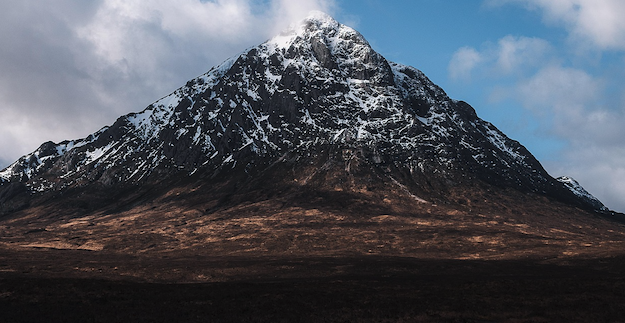
Wolf-less mountain in Scotland
Ernest Thompson Seton wrote about his connection to Clan Cameron and to the name Seton.
Seton-Thompson v. Thompson Seton
He was so enamored of his Seton heritage that as a teenager he changed his last name from Thompson to Seton, although he waited until after his mother’s death to use it publicly. Attribution of “Seton-Thompson” changes to “Thompson Seton” by 1903. “Thompson” was a fake name used by his Cameron ancestors to hide from the English in South Shields, England following the 1746 disaster at Culloden where both Setons and Camerons fought against the English.
He mentioned his connection to the Camerons in his 1940 memoir Trail of an Artist-Naturalist (pg. 4).
“On the Cameron side I had a similar inheritance; all of the Camerons were hunters—often man hunters—and our remote ancestor Evan Cameron of Lochiel was the most famous wolf hunter of his day. One by one he hunted down the wolf packs that ravaged the highland herds, and in the final round-up it was his sturdy arm that drove the spear through the last grim leader of the wolves and ended forever the menace of the wolf in Scotland. The middle name ‘Evan’ that my parents conferred on me was in memory of this famous wolf-hunting ancestor.”
The Lion in Winter
I cannot say how Seton came upon this story. Perhaps a family tale. I found the earliest known reference to the story of the seventeenth Clan Chief Ewen Cameron Lochiel and the killing of the last wolf. It was recorded in a single footnote of A Tour of Scotland, 1769, a travel guide published in 1772 by Thomas Pennant. (Pennant provided a model for the all the travel guides that followed. Thanks, Tom!)
I will quote it in full:
“Fort William, built in King William’s reign as was a small town near it, called Maryborough, in honor of his Queen; but prior to that, had been a small fortress, erected by General Monk, with whose people the famous Sir Ewen Cameron † had numerous conflicts. [aka Evan.]
† Who is said to have killed the last wolf in Scotland about the year 1680.”
And so, the story of the last Wolf in Scotland can be traced to a single dagger-shape footnote. Further: I assume this King William was William I (aka “The Lion” aka “The Rough”). Uilliam Garm reigned 1165 to 1214. William proved less rough than England’s Henry II who defeated him in an 1174 battle. And further trivia: Henry was married to Eleanor of Aquitaine.
And MOST IMPORTANTLY Henry and Eleanor were portrayed by Peter O’Toole and Katharine Hepburn in the movie, The Lion in Winter (1968), which also introduced to the big screen Anthony Hopkins. My favorite Christmas movie, set in 1183.
What About the Wolf?
I guess the Wolf got lost in all of this. I have written a novel about him (the wolf). Maybe someday it will get published. Literary agents take note. Also, will need to find the right Scottish actor to portray Ewen Cameron for the movie version. I’m open to suggestions.
And finally: With the Wolves gone, it was a case of Deer Gone Wild. The Scottish Red Deer (Cervus elaphus scoticus) commenced to destroy the already challenged forests of its native lands. Wolves and Deer had maintained a predator-prey balance for thousands of years. Ecological disaster ensued when this relationship was destroyed. (Thanks, Ewen!)